Some wood chippers are absolute branch managers, while others chew one twig and look personally offended. There, that’s my timber pun done early. The real difference between professional chipper hire companies and amateur outfits is technical: capacity, cutting systems, feed systems, power, maintenance, safety, correct sizing and proper backup support.
If the chipper is underpowered, blunt, poorly guarded, wrongly matched to the job or unsupported when it fails, productivity drops and risk climbs. A professional hire company should know exactly what the machine can process, how it has been maintained, which safety systems it carries, and whether it suits your site.
Cambrian Chipper Hire & Sales, based at Riverside Works, Ely Bridge, Cardiff, supplies commercial wood chippers for hire and sale across South Wales, including premium machines from FORST, GreenMech, Timberwolf and Weibang. But rather than a “pick us because we’re lovely” piece, let’s get into the oily, sharp, horsepower-filled details.
Commercial-grade chippers are not just bigger garden shredders
A domestic garden shredder is handy for light pruning, leafy waste and the sort of branches you can carry in one hand while still holding a cuppa. A commercial chipper is built for sustained, repeated processing of woody material without overheating, stalling or turning the job into a smoky argument.
The main technical differences are:
- Branch diameter capacity, commonly 6-inch or 8-inch for professional arboricultural work
- Engine power and torque for sustained cutting under load
- Hydraulic feed rollers that pull material in consistently
- Disc or drum cutting systems designed for volume and chip quality
- No-stress feed controls that prevent the engine being overloaded
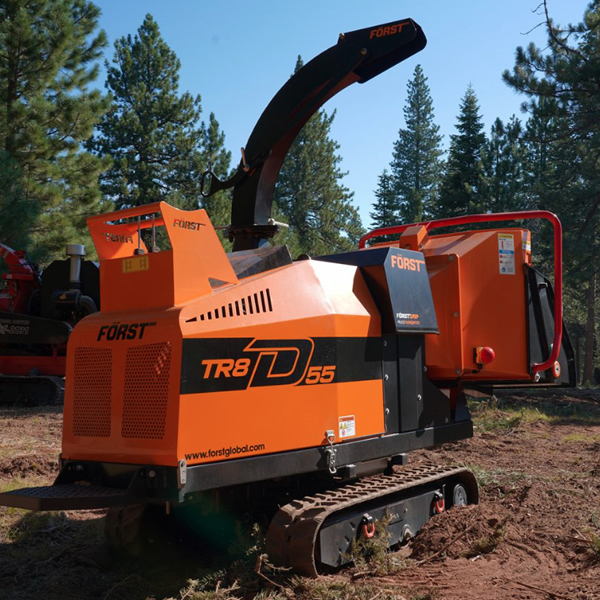
- Tracked or road-towable chassis options for different access conditions
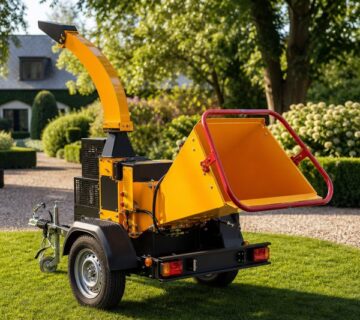
Cambrian stocks professional machines in 6-inch and 8-inch capacities, with both tracked and road-towable configurations available. That matters because the best chipper is not always the biggest one. It is the one that matches the timber, access, ground conditions, operator skill and expected volume.
Using an underpowered machine for heavy brash is a bit like asking a toaster to cater a wedding. Brave, technically possible for three minutes, then everyone regrets it.
Capacity: branch diameter is only part of the story
Branch diameter capacity gets the attention, and fair enough. If you have 8-inch timber, a 3-inch domestic shredder is not “nearly there”. It is completely out of its depth.
However, professionals look beyond the headline number. A chipper’s rated capacity tells you the maximum diameter it can accept, but real-world performance also depends on material type, shape and volume.
Fresh leylandii behaves differently from seasoned hardwood. Forked branches need a different feed approach from straight stems. Wet leafy brash can clog lighter machines. Heavy timber needs enough engine torque and sharp blades to cut cleanly. High-volume work needs a machine that can keep feeding, not just cope once for the brochure photo.
A 6-inch commercial chipper is often ideal for tree surgery, estate work, grounds maintenance and garden clearance where branches are moderate but volume is high. An 8-inch chipper gives more capacity for larger timber and heavier arboricultural jobs.
The amateur mistake is treating all green waste as the same. Professional hire teams know that material type affects machine choice. That advice prevents delays, damage and a great deal of standing around saying, “I thought it would take that.”
Cutting systems, feed systems and power: the business end
The cutting system decides how efficiently timber is processed, how consistent the chips are, and how hard the engine has to work. Most professional wood chippers use either disc or drum cutting systems.
Disc chippers
A disc chipper uses a heavy rotating disc fitted with blades. Timber is fed into the disc, and the blades slice chips away as it rotates.
Disc systems are known for producing consistent chips with the right feed design and sharp blades, and are often valued where chip quality matters, such as landscaping or biomass preparation.
Drum chippers
A drum chipper uses a rotating drum fitted with blades, fed against the drum which cuts and pulls material through. Drum systems are often excellent for high-throughput work with brash, branches and mixed arboricultural material, and tend to be rugged and productive when correctly specified.
The key point is this: a professional hire company should understand how the cutting system suits the job. An amateur outfit may simply say, “It chips wood.” That is true in the same way a spoon and a digger both move soil. Technically yes, but please do not landscape a business park with cutlery.
Hydraulic feed and no-stress control
The feed system is where a lot of time is won or lost.
On small domestic machines, you often push material in manually and hope it catches. That might be fine for light garden waste, but it becomes frustrating and risky with awkward branches, forked material or volume work.
Commercial chippers usually use hydraulic feed rollers. These grip the timber and draw it into the cutting chamber at a controlled rate. Better machines also allow operators to stop, reverse or regulate the feed, which helps with awkward branches and reduces operator fatigue.
Many commercial chippers also feature no-stress or auto-feed technology. This senses engine load and pauses or slows the feed rollers if the chipper is working too hard. Once engine speed recovers, feeding resumes. Without it, operators may keep forcing timber into a struggling machine, causing stalls, blockages and unnecessary wear.
Horsepower and torque
A chipper’s engine does more than make noise and look important. It has to generate enough torque to keep the cutting system spinning under load.
Underpowered chippers may cope with straight, dry, small-diameter material, but struggle with dense, wet or knotty timber. They slow down, stall, snatch at branches, clog more often and produce uneven chip.
Professional hire fleets use commercial petrol or diesel engines designed for sustained work. The machine specification should match the chipper’s diameter capacity and workload. A wide throat is not much help if the engine cannot keep up.
When Cambrian advises on machine selection, power source and horsepower are part of the discussion. A road-towable 6-inch chipper might suit accessible domestic tree work. A tracked 8-inch machine may suit larger sites, uneven ground or places where dragging brash long distances would waste hours.
Tracked vs road-towable: access is technical too
Choosing between a tracked chipper and a road-towable chipper is not just personal preference. It is about site layout, ground conditions, access width and where the timber is coming from.
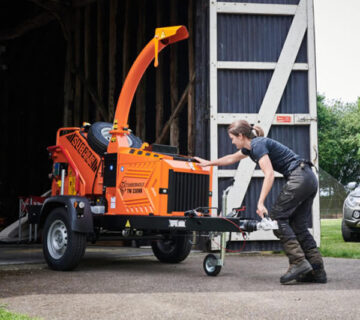
Road-towable machines are ideal when you can park close to the work area or process material near a roadside, driveway, estate road, car park or hardstanding. They are efficient for arborists, landscapers and contractors moving between sites.
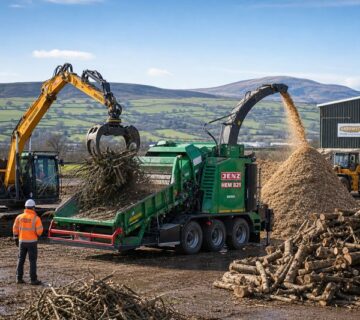
Tracked chippers can travel across rougher ground and get closer to the cutting area. That reduces dragging distance, saves labour and helps on awkward sites such as large gardens, woodland margins, parks, estates, sloping ground or soft ground, where appropriate ground protection is used.
An amateur approach might be, “Here’s the chipper we’ve got.” A professional approach asks, “Where is the timber, how do we get the machine there, and what will the ground tolerate?”
That question can save more time than people expect. Brash dragging is the gym membership nobody asked for.
Blade sharpness and maintenance: servicing is not a wipe with a rag
Sharp blades are one of the clearest signs of a properly maintained chipper fleet.
A sharp blade slices timber cleanly. A blunt blade batters, tears and crushes material. That affects throughput, fuel use, vibration, wear, operator effort and chip quality. It can also affect safety, because blunt blades encourage poor technique. Operators may push harder, feed badly or try to force awkward branches.
Well-maintained sharp blades help produce:
- Cleaner, more uniform wood chip
- Faster throughput
- Lower fuel consumption
- Less vibration and component strain
- Reduced risk of snatching or bouncing material
- Easier feeding
Cambrian’s machines are described as fully maintained, kept sharp and serviced regularly. That is exactly what you want to hear when hiring a chipper. Blade condition should never be a mystery solved halfway through the first pile of branches.
A professional maintenance regime covers far more than blades. Commercial chippers involve anvils, belts, bearings, hydraulics, feed rollers, guards, tyres, tracks and safety systems, and each needs regular inspection, from anvil clearance and hydraulic oil levels to brakes and hitches on road-tow units.
A professional outfit can explain how its machines are serviced and prepared. An amateur operator may rely on the machine starting as proof that everything is fine. By that logic, my car is in perfect condition because the radio works. My mechanic has expressed views.
Safety features: proper chippers are designed around risk control
Wood chippers are powerful machines. That power is the point, but it also means safety systems matter enormously.
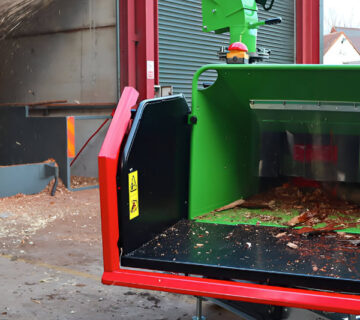
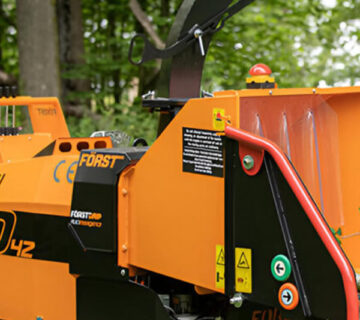
Professional-grade machines should include safety features designed to control access, stop feeding quickly and protect operators during use and maintenance: emergency stop or bump bars around the feed hopper, feed control with forward, stop and reverse functions, guarding and interlocked covers around moving parts, an infeed hopper design that keeps hands away from rollers and blades, and a stable chassis with secure towing.
The emergency bump bar is particularly important. If an operator needs to stop the feed quickly, it provides a large, accessible control point. On professional machines, these systems should be checked regularly and taken seriously.
Safety is not just about having features bolted on. It is about ensuring they work and that users understand them.
If you are weighing up DIY risk more broadly, Cambrian has also covered the practical differences in Specialist Chipper Hire vs DIY: What’s the Real Difference?. Here, the technical point is simple: hire equipment must be designed, maintained and explained with safety in mind.
Operator training: the machine is only half the equation
Even a top-spec chipper becomes risky in the wrong hands.
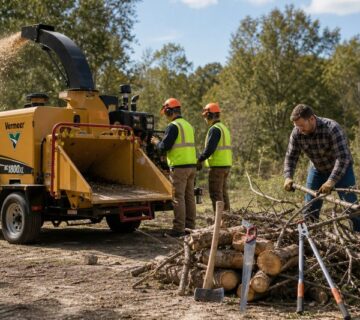
Trained operators understand feed technique, exclusion zones, PPE, emergency stops, machine positioning and what not to feed. That last category is surprisingly important. Chippers like timber. They do not like metal, stones, fencing wire, soil-packed roots, forgotten nails or someone’s optimism.
Proper instruction should cover safe start-up and shutdown, emergency stop operation, feed direction and reverse controls, what material the machine can and cannot process, how to feed forked branches safely, keeping hands and clothing clear of the infeed, and what to do if the machine blocks or behaves abnormally.
A professional hire company should give clear guidance on machine use and suitability. For larger, more technical or commercial jobs, experienced advice at the hire stage can prevent problems before anyone starts the engine.
Cambrian’s team is highly experienced and offers expert advice on machine selection. That matters because good advice is part of the equipment package. You are not just hiring metal, blades and horsepower. You are hiring the knowledge that helps you use the right machine properly.
Correct machine sizing: one-size-fits-all is where jobs go wrong
One of the biggest differences between professional and amateur chipper hire is how the machine is specified.
Amateur or fly-by-night setups often have a tiny fleet, or perhaps just one machine. That means every enquiry gets the same answer. Convenient for them, less convenient for your site.
Professional hire companies ask better questions instead: what diameter is the largest material, is the waste mainly brash or mixed timber, how much volume needs processing, what the ground and access are like, and whether delivery, collection or a trailer is needed. These questions are not faff. They are how you avoid hiring a machine that is too small, too large, unsuitable for the site or awkward to transport.
Too small, and the job drags on with jams, stalls and constant cutting down of material. Too large, and you may struggle with access or manoeuvring. Correct sizing gives you the best blend of throughput, safety and practicality.
Cambrian offers short and long-term hire, along with delivery and collection and trailer provision. They also supply new and pre-owned machines, with 0% finance available on selected machines, for those looking to buy rather than hire. As a FORST approved dealer, they can advise on premium commercial equipment, not just point at the nearest machine and hope.
You can learn more about the company and its hire and sales services on the Cambrian Chipper Hire & Sales homepage.
Insurance, liability and backup: boring until something goes wrong
Insurance and records are not glamorous. Nobody has ever shouted, “Tell me more about servicing documentation!” across a pub garden. But they matter.
When you hire from an amateur operator without proper cover or maintenance records, you may expose yourself to significant risk. If the machine fails, causes damage, injures someone or turns out not to have been maintained properly, liability can become messy very quickly. Professional hire firms should be able to discuss hire terms, servicing and maintenance records, safety inspection routines, roadworthiness checks for towable units, insurance arrangements and guidance on safe operation. For businesses, contractors, estates and local authorities, that paperwork is part of your risk management. Domestic customers benefit too, because a chipper is too powerful a machine to hire on a handshake and a shrug.
Even well-maintained machinery can develop faults, and the difference is what happens next. With an amateur setup, a breakdown may mean the job stops completely. If they only have one machine and no workshop support, your project waits. Professional hire companies plan for this with spare machines, fast servicing, access to parts or the expertise to diagnose faults quickly, because chipper failure always happens at the worst possible moment. Woodchip waits for no one. Well, technically it waits forever, but it does so in a really inconvenient pile.
Cambrian hires and sells established brands including FORST, GreenMech, Timberwolf and Weibang, and is a FORST approved dealer, offering 0% finance on selected machines for those looking to buy rather than hire. Working with premium equipment helps, but the support behind it, servicing, spare capacity and honest advice, is just as important.
Signs you are dealing with a professional chipper hire company
If you want a quick technical sense check, look for clear answers to these questions: What is the maximum branch diameter capacity? Is the machine tracked or road-towable? How does the feed system operate, and does it have reverse and emergency stop functions? How is blade sharpness managed, and when was the machine last serviced? What safety guidance will you receive, and what happens if the machine develops a fault mid-job?
If the answers are vague, that is a warning sign. “It’ll probably do it” is not a technical specification. It is a phrase that usually appears shortly before disappointment.
The professional difference is technical, not cosmetic
A smart-looking chipper is nice, but paintwork does not process timber. The real difference lies in specification, maintenance and support.
Professional chipper hire companies invest in commercial-grade machines with the right capacity, proper cutting systems, strong feed mechanisms, suitable power and robust safety features. They keep blades sharp, service equipment properly, size machines to the job and offer backup if something goes wrong.
Amateur or underprepared operators may still have a machine that chips wood. But if it is underpowered, blunt, poorly maintained, wrongly specified or unsupported, the job can become slower, riskier and more expensive in time, labour and disruption.
For commercial arborists, landscapers, estates, grounds teams and serious domestic projects, that technical difference matters.
If you need help choosing the right 6-inch or 8-inch chipper, tracked or road-towable, for short or long-term hire, Cambrian Chipper Hire & Sales can talk you through the options properly. Call 02920 569311 or enquire about chipper hire and get matched with the right machine for the job.